From Nubia to Khartoum: The Politics of Constructing the Sudan National Museum
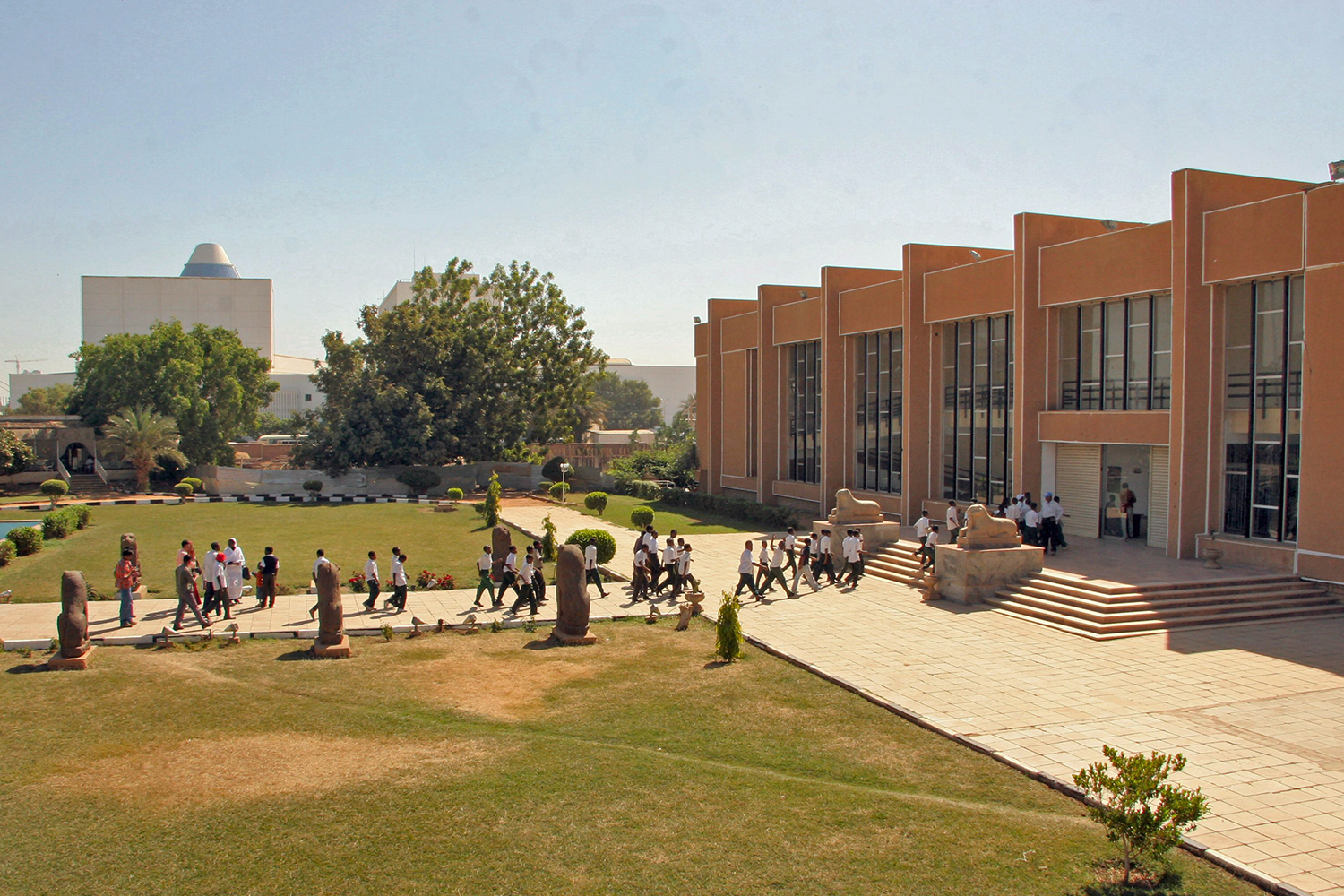
Sudan National Museum, Vaughan Parry (2010).
This article was published in Docomomo Journal Issue #74 Imperfect Modernism (2025). ︎︎︎
Abstract
In April 2023, just weeks after the armed conflict broke out in Sudan, the National Museum was damaged by fire and later broken into by the militias of the Rapid Support Forces. In the months to come, it would be reported that a part of the museum’s collection of over a hundred thousand priceless antiquities was looted. These events chronicle the most recent entanglements of the Sudan National Museum with politics and power relations in Sudan. However, examining the museum’s history unveils deeper connections to pivotal moments in the nation’s history. The museum’s colonial roots, as a building, archive, and educational institution, reveal how the British perceived it as a potential tool for establishing sovereignty over Sudan through the politicization of archaeology. As the project was given new life after Sudan’s independence, external influences continued to shape the museum when it became entangled in the geopolitics of the Nile Waters Agreement and the construction of the Aswan High Dam. The International Campaign to Save the Monuments of Nubia, launched by UNESCO in response, was a vital moment during which the endangered Nubian antiquities were ‘displaced’ to the museum. While the museum was positioned as a repository for cultural heritage protected by conservation law, the museum building itself fell outside of this protection because it does not apply to modern heritage.
Since the museum is a national project, it would come to be governed by the politics of Sudan’s successive military governments, each leaving its imprint on the project. All these political influences cannot be separated from the museum, rendering it an archive of critical moments that shaped the country. Unraveling this archive allows us to trace the interwoven threads of displacement, national identity, and representation embedded within the museum complex. It allows us to understand the museum not merely as a static collection of objects, but as a dynamic reflection of Sudan’s evolving socio-political landscape.
DOI: https://doi.org/10.52200/docomomo.74.03